


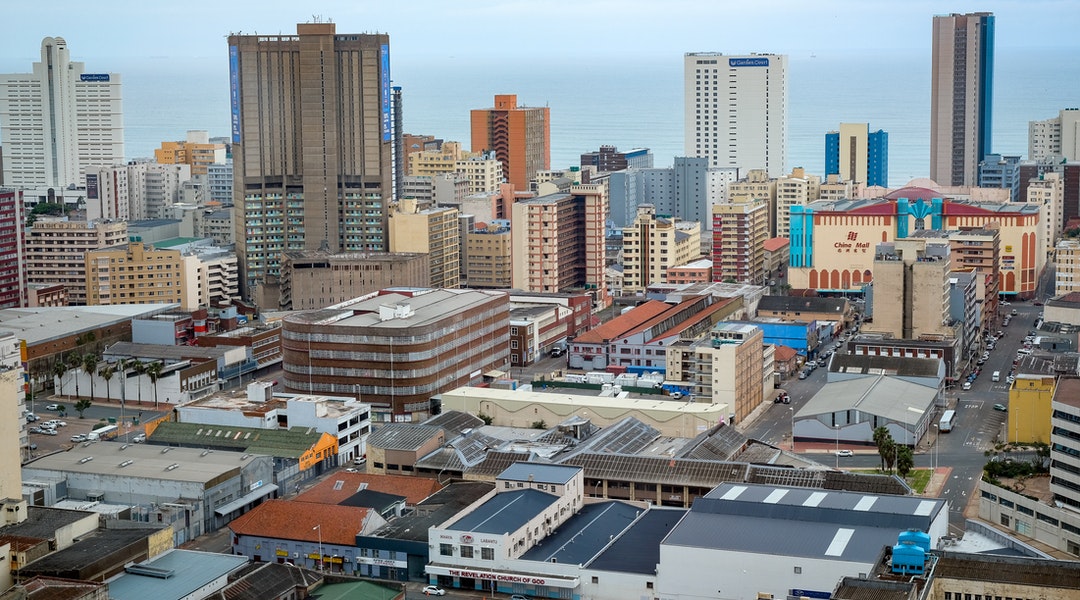
South Africa, renowned for its beautiful natural scenery, rich cultural heritage, and bustling cities, continues to attract Kenyans and expatriates seeking new opportunities and lifestyles. The republic, often described as “a world within a country,” offers everything from pristine beaches and deserts, mountains and forests, to stunning game reserves.
With dozens of cultures and 9 provinces spanning 1.2 million square km to explore, expect to never run out of new experiences after moving to South Africa. The country has about 11 national languages, with many more unofficial languages spoken. To fully enjoy life in the rainbow nation as a foreigner, it’s essential to consider the country’s history and prepare thoroughly for the cross-border move.
Kenya and South Africa have had a longstanding cordial and diplomatic relationship for close to 30 years. Both countries were British colonies and are currently members of the Commonwealth of Nations. The two countries have a bilateral partnership founded on agreements and MoUs in fields such as sports, trade, agriculture, tourism, and transport and environment.
If you’re moving from Kenya to South Africa, you’ll be pleased to know that the major cities of Johannesburg, Pretoria, Cape Town, and Durban are highly developed. There’s also a considerable population of Kenyans in these cities, so you’ll feel quite at home.
Both countries have international airliners, Kenya Airways and South African Airways, which ply between the two nations. relocating to South Africa from Kenya requires preparation across key areas: navigating visa/work permit requirements, customs clearance, and logistics management.
Here are a few things to be aware of to ensure a stress-free move to South Africa:
1. Returning Residents Must Update Their Status with SARS
Returning South African residents relocating from Kenya must check and update their status with the South Africa Revenue Service (SARS). This will help prevent Customs delays due to tax non-compliance or any other pending requirements.
For anyone else moving to South Africa from Kenya, it’s advisable to check what the SARS requires of you to facilitate timely clearance of your imported shipment.
2. Conditions for Tax-Free Entry of Used Household Goods

Immigrants, temporary residents, returning South African residents, and diplomats can import household and personal effects into South Africa.
However, you’re only allowed one duty-free import. If you wish to import a second shipment, you will need to obtain permission from SA Customs.
If you’re a returning resident, you must have been out of South Africa for an unbroken period of at least six months. Only then are you entitled to duty-free importation of household goods you purchased while outside the country.
Other conditions for duty-free importation by returning residents include:
- Goods cannot be sold within six months from the date of entry
- Household goods and personal effects must be imported for personal use
- Imported household goods must be the Bonafide property of the importer
- The allowance to import personal items extends to family members
3. Non-Diplomatic Foreigners Need Work Permits and Other Documents
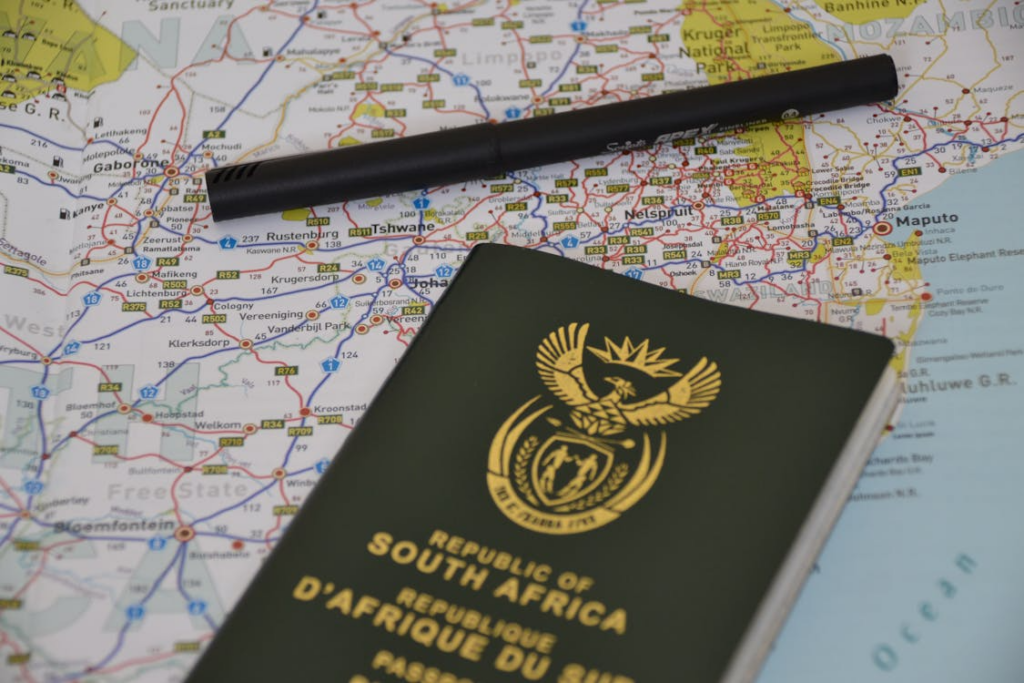
Immigrants, returning residents, and temporary residents can import their used household goods and personal effects into SA duty-free. However, temporary residents are eligible if they have a temporary work permit that’s valid for more than six months.
Therefore, it’s advisable to obtain your work permit before your shipment is dispatched from Kenya. Applying for and getting a South African work permit can take a long time and the process can be quite unpredictable.
You must apply for the appropriate temporary work or residence permit at the South African embassy in Kenya or your country of origin. If there isn’t one there, then you should apply through one in a neighboring country.
After securing a temporary work permit, note that as a temporary resident, you will be required to have owned your goods and personal effects for at least a year before importing them.
Other immigrants and returning residents must produce residence permits to be allowed this exemption.
Other than a valid work or residence permit, immigrants, returning residents, and temporary residents must provide:
- Passport (Certified copy)
- Detailed inventory or packing list
- Affidavit (to be completed in South Africa)
- DA 304 and P.1.160 Customs forms (completed in 3 copies)
South Africa doesn’t allow duty-free importation on tourist or visitor visas even if you have a pending work or resident permit application. Therefore, plan accordingly.
4. Diplomats Moving to South Africa Need a Diplomatic Clearance Certificate
Foreign diplomats relocating to South Africa are allowed duty-free importation: they only need to produce a packing inventory and a diplomatic clearance certificate.
The certificate must be completed and signed by the relevant consulate or embassy in South Africa. It should also be countersigned by the South African Department of Foreign Affairs.
It’s worth noting that South Africa only extends duty exemptions on imported household goods and personal effects to foreign diplomats who come from countries that afford the same privilege to South African diplomats.
5. Ship Your Household Goods and Personal Effects via Sea
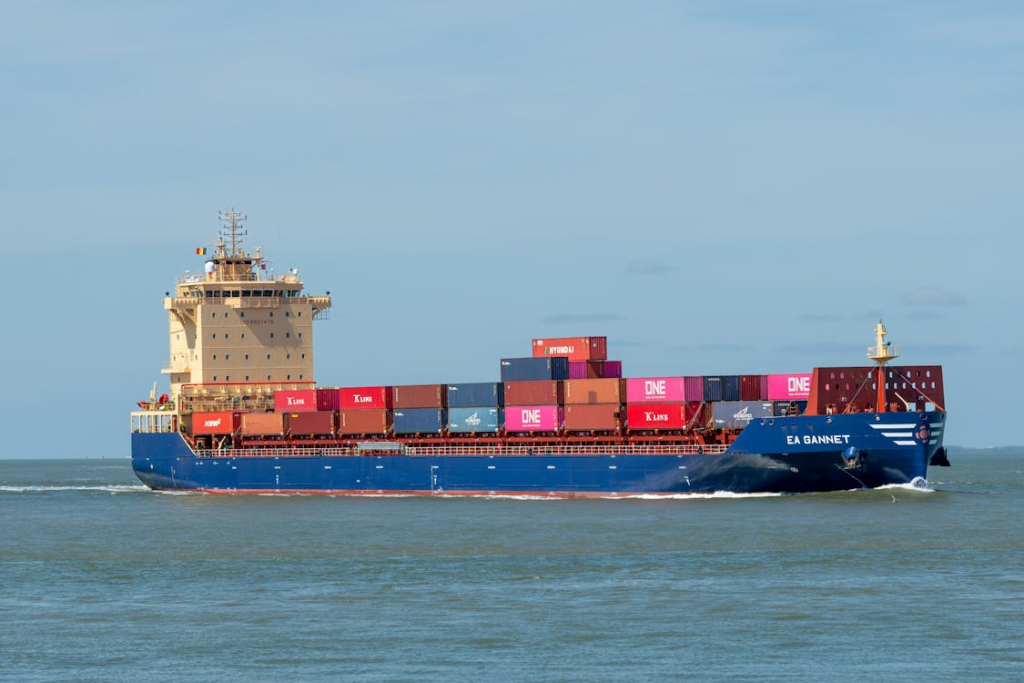
Experienced international moving experts recommend shipping your household goods and personal effects via sea when moving from Kenya to South Africa.
The Full Container Load (FCL) is more cost-effective and quicker for larger shipments, but you may consolidate your household goods and belongings with other shippers with the Less than Container Load (LCL).
Note, however, the logistics of consolidation and deconsolidation make LCL shipping costly in terms of time and expense.
You could still opt to transport your shipment by road through Tanzania, Zambia, and Botswana, but this can be a costly logistics and security nightmare.
It only takes about 10 days to ship your goods via sea from Mombasa to Durban. With this shipping time, you could, in fact, complete the entire process of moving to South Africa from Kenya and settle in Johannesburg within 30 days.
6. Shipper Must be in South Africa Before Shipment Arrives
The owner of the household goods and personal effects being imported must be in South Africa before Customs clearance can take place. Therefore, you should be in SA at least 10 days before your shipment arrives.
Typically, it will take about 7 to 10 working days to complete Customs clearance from the date you present your documents.
While SA Customs can clear consignments in the absence of the owner, sometimes they may request the owner’s passport to facilitate the process. If you’re not present when this demand is made, your shipment will be placed in bond. Once this happens, your shipment will be released after you present your passport and any other required documents.
Your shipment can also be cleared into bond if you don’t possess a temporary or permanent residence/work permit. Your goods will remain here until you present the correct documents. Naturally, you will have to pay bond storage charges to release your shipment.
7. South Africa Differentiates Between Household Goods and Personal Effects
South African Customs treats personal effects as items of a personal nature. Household goods, on the other hand, are viewed as less personal items.
Examples of personal effects include:
- Books
- Shoes
- Videos
- Clothing
- Sporting equipment
Examples of household goods, on the other hand, include:
- Rugs
- Linen
- Furniture
- Appliances
- Crockery
It’s important to make the distinction for when you need a relative to complete Form P.1.160 in your absence. This form is used to declare unaccompanied manifested personal effects only. You will be required to be physically present in South Africa for customs clearance if your shipment contains goods deemed to be household effects.
8. Your Shipment Will Be Subject to Physical Inspection by South Africa’s Customs
SA Customs may designate, within its discretion, any shipment for physical examination. Once selected for the inspection, you will have to pay a US$100-200 fee.
Your shipment (which is under embargo once it’s designated for inspection) may be moved to a warehouse to be examined under supervision. This usually depends on the destination representative you’re using. The best option is to hire professional movers with experience in international moving to help you navigate customs clearance and other formalities.
9. Relocating with Your Car to South Africa is Possible Under Strict Rules

Before preparing your car for international relocation, it’s crucial to be aware that South Africa has stringent regulations on the importation of used motor vehicles. Only vehicles that were initially manufactured or registered in the country get an easy pass. South Africa also prohibits the importation of new or used left-hand drive vehicles bought after January 1st, 2000.
If you wish to import your car to SA, you will need two independent import permits from SA authorities. The two permits must be processed before your vehicle is dispatched from Kenya.
The International Trade and Administration Commission (ITAC) issues an import permit, while the National Regulator for Compulsory Specifications (NRCS) gives a Letter of Authority (LOA).
You will be liable for import duty and VAT if you’re a temporary resident. You must pay a cash Customs Bond that covers your car’s full duties and taxes upfront. You can only apply for a refund of this bond from the South African Department of Customs & Excise when you show proof that you’ve re-exported your vehicle from South Africa.
Returning residents must pay full duties and taxes on the motor vehicles they import.
Only if you’re a returning (non-diplomatic) immigrant or South African citizen who’s changing permanent residency to South Africa can your car enjoy duty-free entry. Even then:
- You can only import one car per family
- Your vehicle must not be sold or otherwise disposed of for two years after the date of importation
- Your car must have been in your use and possession abroad for more than 365 days before importation
No duties or taxes are paid in the case of foreign diplomats moving to South Africa from Kenya. However, the exemption is only subject to the provision of the diplomatic clearance certificate and proof of the vehicle’s value.
Best Movers to South Africa: Nellions Moving and Relocations Company

Planning and executing an international move from Kenya to South Africa can be a tedious and overwhelming task. This is especially true when you’re unfamiliar with SA’s customs requirements and the shipping logistics involved.
To ensure a smooth transition free from preventable mishaps, it’s advisable to hire an experienced international moving company. Nellions Moving and Relocations Company is an IAM-certified mover that provides expert packing, customs agency services, and door-to-door delivery to simplify your move.
With Nellions as your moving partner, your move from Kenya to South Africa can be an exciting and rewarding experience.
Get your free moving quote today.
Call us on +254700000002 or email move@nellions.co.ke