



Relocating overseas is one of life’s most exciting transitions, offering new opportunities for career growth, global exposure, and lifestyle changes. However, international moving from Kenya involves more complex logistics and significant costs that differ a lot from domestic moves. Understanding what factors influence international moving costs can help individuals and families budget better and make informed decisions about service levels and shipping methods.
This guide from Nellions breaks down factors that drive international moving costs from Kenya and what a realistic price range looks like in 2026.
The 5 Factors that Drive Your International Moving Costs
1. Destination
Moving to neighboring East African countries such as Uganda, Tanzania, and Rwanda is generally economical. These countries offer relatively affordable international moving options because of shorter distances and established transport corridors.
Relocations to Europe and North America sit in the middle-to-upper range, depending on the country, shipping method, and service level. Common destinations with established routes such as the Netherlands, Germany, and the United Kingdom may offer better value compared to less frequent destinations.
Most household moves from Kenya to Europe or North America range between USD 3500 and USD 19,500, depending on your destination, volume of goods, and your chosen service level. Premium prices reflect longer shipping distances, multiple handling stages, and complex customs procedures involved.
2. Shipping Volume and Weight
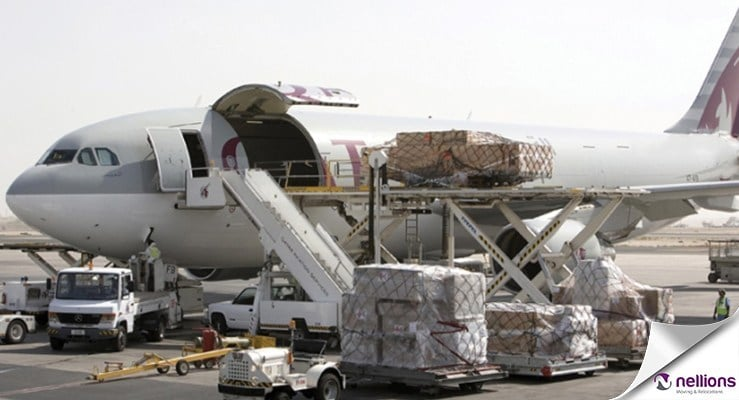
Depending on the shipping method you will have chosen, the weight (for air freight) or volume (for sea freight) of your shipment must be measured for proper cost estimations.
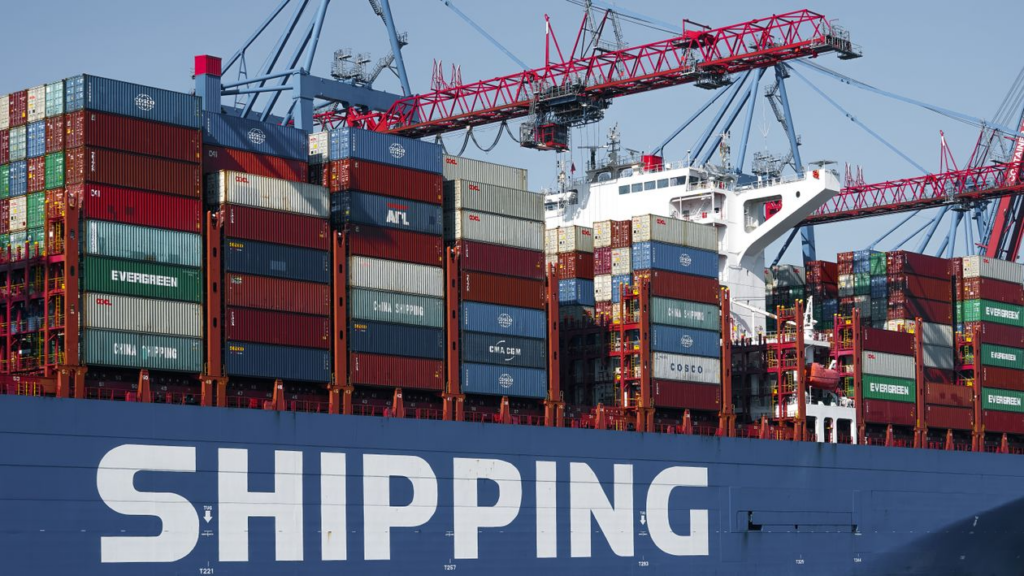
Sea freight, which is usually more cost-effective, is priced in cubic meters (CBM). A studio or 1-bedroom apartment generates 5-15 CBM; a 2-bedroom apartment, 15-30 CBM; and a 3-bedroom apartment, 30-50 CBM. Larger homes and families may exceed 50 CBM.
Volume or weight restrictions and charges significantly impact moving costs for items exceeding standard limits. Appliances or equipment may require special handling and incur extra expenses. Every extra CBM adds to cost – so decluttering your home before your survey is one of the smartest financial moves you can make towards your move overseas.
3. Shipping Method – Sea or Air?
Sea freight represents the most economical shipping method for long-distance international moves, typically costing 60 to 70 percent less for shipments of the same volume. However, delivery can take up to 85 days, making it suitable for people with flexible timelines.
The sea shipping options – Full Container Load (FCL) and Less-than-Container Load or shared container/groupage consignment – present different tradeoffs between cost and security.
Full Container Load (FCL)
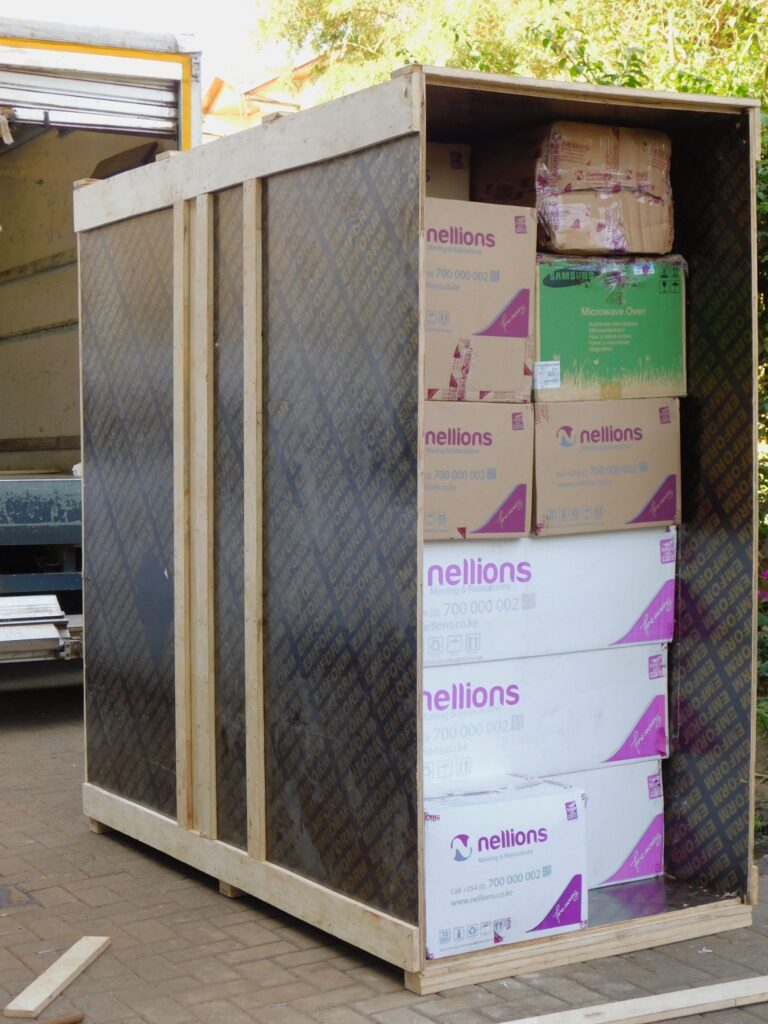
A dedicated container is the preferred option for larger household moves. Your goods travel in their own sealed container, which means greater security, faster port handling, and no risk of your belongings mixing with other consignments. A 20ft container typically accommodates a one to two-bedroom home; a 40ft container suits larger family households.
There are 2 shipping options for shared containers;
- Groupage – means a defined group of clients whose shipments are heading to the same destination port sharing one physical container (20ft or 40ft). The freight forwarder consolidates these shipments since they’re all going the same route. Each client pays for their portion of that container space.
- Less-than-Container Load – a more general term used in freight where cargo from various shippers heading to potentially different destinations is consolidated, often handled through a hub-and-spoke model with deconsolidation at various points.
The key differentiator in groupage is the shared route and shared destination port. The clients in a groupage shipment are essentially neighbors on that voyage. It also means;
- The container isn’t deconsolidated mid-route at various hubs
- All cargo on that container arrives at the same port together
- It is a more controlled and predictable arrangement than general LCL consolidation
- The freight forwarder needs enough clients heading to that specific destination to fill or justify the container
This makes groupage particularly well-suited for popular corridors from Kenya – for example, Mombasa to Felixstowe (UK), or Mombasa to Rotterdam (Netherlands) – where there is enough regular demand from multiple clients heading to the same port to make consolidation viable.
Air freight offers speed at premium prices. Most shipments arrive within 2–14 days, depending on destination and airline schedules. It is best reserved for urgent relocations, essential personal effects, high-value items, or diplomatic and corporate assignments with tight timelines.
4. Your Preferred Service Level
A comprehensive door-to-door service involves professional packing, transportation and customs clearance at the port, delivery to the destination, and unpacking. It typically costs more than port-to-port or port-to-door arrangements which transfer more responsibility to you.
Most families prefer full-service international moving from Kenya which is more convenient and eliminates coordination challenges and multiple handling stages.
5. Timing and Transit Times
Peak international travel seasons just before holidays and during the summer – typically between June and August, and again November through January – see increased demand and corresponding higher rates. Off-peak season moves offer up to 15-20 percent cost savings for flexible clients.
For urgent international moves that serve critical business or personal deadlines, you might require express services which cost premium rates but can reduce transit time from weeks to days.
Below are estimates for transit times which vary by vessel schedule and port conditions;
| Destination | Sea Freight | Air Freight |
| South Africa | 21-45 days | 4-8 days |
| Middle East | 27-50 days | 4-8 days |
| Europe (UK, Germany, France etc.) | 50-90 days | 8-14 days |
| Australia | 68-90 days | 8-20 days |
| North America | 35-50 days | 6-14 days |
What are Some Hidden Costs Most People Never Budget For?
A professional international mover’s quotation covers the major line items. However, some cost variables only emerge once the nitty-gritty details of your move are laid bare. Understanding them in advance can save you from costly surprises and can help you compare quotes on a true like-for-like basis.
These cost variables or factors include;
Marine Insurance
Your goods travel thousands of kilometers by road, sea, and air, often passing through multiple handling points. While insurance is not mandatory, it is strongly recommended. Premiums typically range between 2% and 3% of the declared replacement value of your household goods.
Destination Access Surcharges
In many European cities, external furniture lifts (hoists) are required because of narrow staircases, compact elevators, and historic building designs. This is common in Germany, France, Belgium, the Netherlands, Switzerland, Greece, and Luxembourg. These charges are almost always billed separately by the destination contractor – and can be significant if not identified in advance.
Additionally, if your container truck cannot access your driveway or compound, a shuttle service or long carry fees will be expected
Inland Delivery Beyond Major Ports
Standard freight rates cover transportation between major ports and cities. If your new residence is in a rural area, on an island, or in a remote location, additional inland transport costs will apply. Your consultant will assess this when preparing your quotation.
Special Handling for Specific Items
Certain items require specialist packing and handling that attracts additional charges. Common examples include:
- Pianos and large musical instruments
- Fine art, antiques, and sculptures
- Chandeliers and large light fittings
- Large safes
- Motor vehicles
- Fragile or high-value collections
Storage at Origin or Destination

If your new home is not ready when you arrive due to renovation, permit delays, or timing mismatches, storage charges will apply. Both short-term and long-term storage solutions are available, priced by volume and duration.
Customs Duties and Documentation
Many countries allow relocating individuals to import used personal effects duty-free – conditionally. You may need residence permits, proof of prior address, detailed inventory documentation, and tax records. Your destination agent will advise on the requirements for your specific country.
The most common mistake people make when getting international moving quotes is accepting an estimate based on a rough description or a list of rooms. An accurate international moving quotation requires a proper pre-move survey – either in person at your home, or conducted virtually via video call.
A thorough survey allows your relocation consultant to:
- Calculate your true shipment volume accurately
- Identify any items requiring specialist handling or packing
- Assess access conditions at your current property
- Determine whether shuttle vehicles or furniture lifts may be required at destination
- Build a detailed, transparent, itemized quote with no hidden assumptions
Nellions: Your Best International Moving Partner

For more than 12 years, Nellions Moving & Relocations has supported families, diplomats, expatriates, NGOs, and multinational organizations moving to and from Kenya. Our international moving services include door-to-door household relocations, air and sea freight, customs clearance support, diplomatic relocations, corporate mobility programs, storage solutions, and destination services worldwide.
Through our trusted global partner network, we provide seamless relocation support from departure to final delivery – with transparent pricing, professional packing, and a dedicated consultant from survey to the day your goods arrive.
Ready to get your international moving quote? Contact us today for a free, no-obligation pre-move survey and personalized quotation.